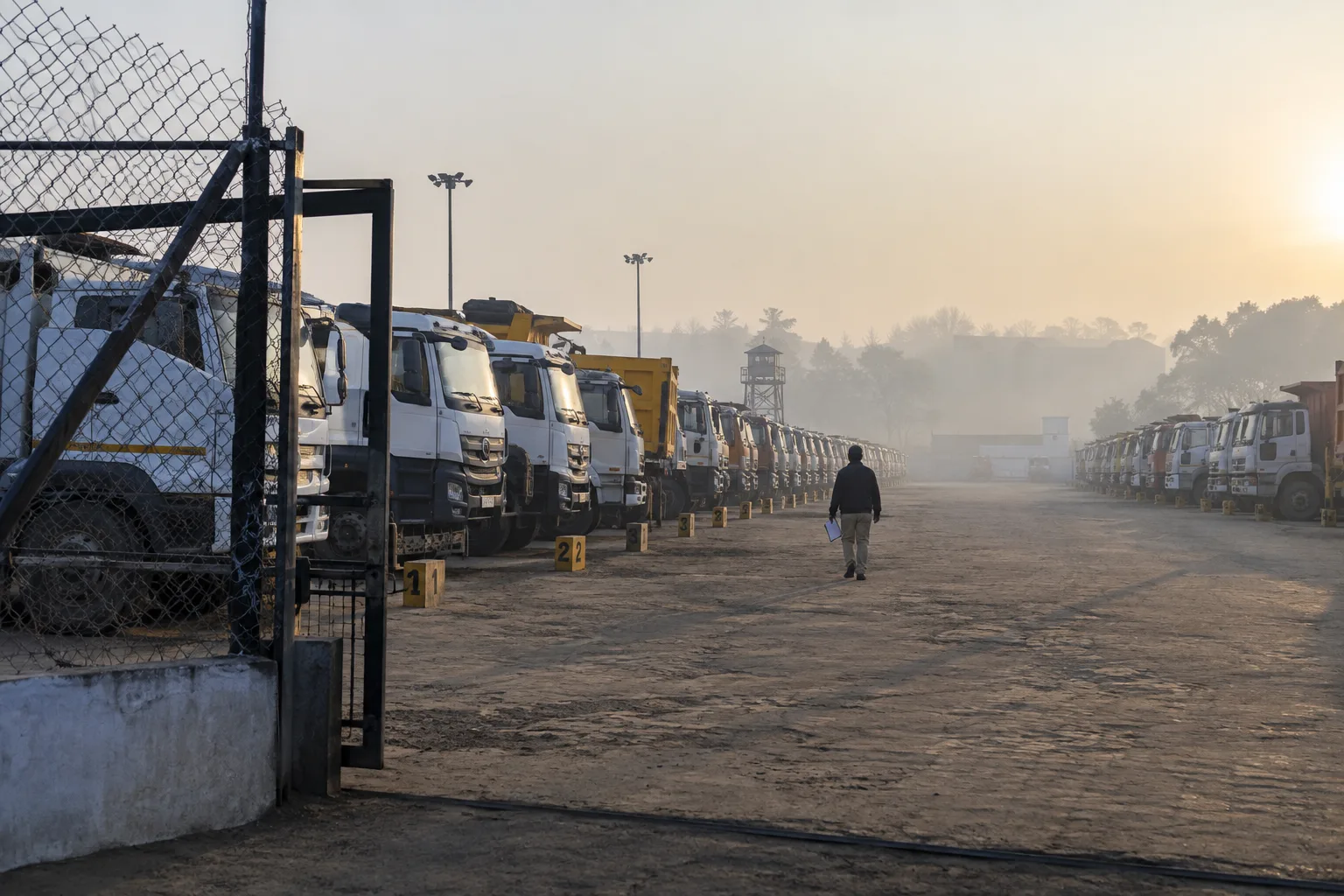
A yard of recovered trucks and machines at dawn

Remarketing · Banks · NBFCs · Lessors · Fleets

Your yard.
Every sale on record.

List recovered and surplus trucks, buses, tractors and construction machines, and decide who to award. The yard runs everything between: the buyers, the inspection days, the deposits, the round and the record.

Lenders, the recovery teamFleets, retiring a batch

Already a member

Open your yard.

Enter your work email; a single-use sign-in link arrives in a moment. No password, nothing to remember.

Yard access is by institution membership.

New to the yard?Request onboarding →

Who sells here

Two kinds of seller.
One yard.

A lender clearing recovered stock and a fleet retiring its own trucks, buses, tractors or machines sell through the same yard, on the same record.

Banks, NBFCs and leasing companies

Lenders, the recovery team

Repossessed trucks, buses, tractors and construction machines, and machines back at the end of a lease, from the sheet to the settled lot.

  • Stock keeps moving instead of sitting in a yard.
  • Every sale can be checked by anyone, the auditor included.
  • Your lots face the whole of Truckaurbus's buying side, not the same twenty local bidders.
  • Approvals stay with your people.
  • Committee and auditor papers come out of the desk.

What we ask

An introduction, and your sheet as it is.

Transport companies, contractors, bus operators and fleet owners

Fleets, retiring a batch

Five trucks, buses or machines, or fifty.

  • One sheet for the whole batch.
  • Every vehicle staged as its own lot.
  • Rounds on the record.
  • Your reserve stays with you.
  • The money never passes through Truckaurbus.

What to bring

  • A vehicle sheet, one row per vehicle
  • Where each vehicle can be inspected, with its photographs
  • Which papers are ready
  • Your timing, and who approves a sale

Just one vehicle? List it yourself on the main siteAlready on the fleet desk? Consign from the vehicle's page

Also selling here: a maker's or dealer's buy-back stock, a government department's or a state transport undertaking's old buses and machines, and school and staff bus operators.

How the work divides

You list. You decide. You release.

Three touches are yours. The yard runs everything between them, on the record.

  1. 01

    List

    By CSV, by mail to your yard inbox, through the API, or one at a time. Your operator approves the drafts; nothing publishes itself.

  2. 02

    Decide

    Accept H1, counter with a deadline, or reject, with the sealed reserve and every bidder's record on one sheet.

  3. 03

    Release

    A few ticks: payment proof, sale letter, gate pass, and the RC receipt, or for a machine never registered with an RTO the invoice copy and your release letter. The lot leaves with a signed close receipt.

The yard runs the rest

  • Buyers on the main site and in the apps, in three languages
  • Their questions, answered once and printed on the lot
  • Inspection slots booked, passes issued, no-shows counted
  • Deposit proofs collected against your batches for your finance desk
  • The round: timed, sealed or printed price, with a sealed reserve and a soft close
  • The record: the audit log, the signed receipt, the auditor's pack

Inside the yard

The auction is one step.
The desk holds the whole file.

Six connected work areas. Move between them to see how the record stays with a lot before, during and after the sale.

Institution / seller workspaceExample lots · no amounts

3Lots
1In auction
1Awaiting your approval
1In settlement
List a lot

Example lots · no live inventory, bids or amounts

LotVehicle or machineYardStateAuctionbids
Example vehicle 01PuneIn auctionLive · Round 14
Example vehicle 02NagpurIn auctionApproval due · Round 16
Example vehicle 03IndoreSoldSale confirmed · Round 15

In your real desk this table carries the live state, the high bid and the close time of every lot.

Drawn from the desk's own screens: the same rail, stat strips, tables, chips and checklists, with example lots and no amounts. Nothing here is a member institution's inventory.Ask for the walkthrough →

From lot to release

Four stages. One continuous record.

Not a listing handed off to another system after the bidding stops.

  1. 01

    List

    Your lots by CSV, by mail, through the API, or typed one at a time with the register's price guide beside them. Drafts wait for your operator; nothing publishes itself.

    The lot on the record
  2. 02

    Inspect

    Declare inspection days and buyers book slots, arriving with a QR ticket your day host scans. A low-value lot may go video-only, and the page says so before anyone bids.

    Context before the bid
  3. 03

    Sell

    A timed auction with a soft close, a sealed tender, or a printed price for first come. The reserve is committed by hash the moment you schedule; the number stays with you.

    Three sale routes
  4. 04

    Settle

    Payment, sale letter, gate pass, and the RC receipt or, for a machine with no registration, the invoice copy and your release letter: one checklist that releases the lot, and a signed close receipt for the file.

    The complete close file

Sale formats

Choose the sale.
Keep the same file.

A timed auction is not a sealed tender, and neither is a fixed asking price. Make the route clear before the sale starts.

Timed auction

A bidding round with a soft close. The reserve is committed by hash when the sale is scheduled, and the number stays private until the close proves it.

Read the bidding terms for close behaviour and reserve proof.

Trust is in the record

Your decision.
A record that can
be checked.

Three explicit parts of the yard's record-and-proof promise. No decorative trust score, no unexplained verification badge.

Read about trust and proof ↗
  1. 01
    An immutable audit logEvery write by anyone on your desk: who, what, when. Auditors read it and download it; nobody edits it.
  2. 02
    A reserve committed by hashYour reserve is sealed the moment you schedule, and stays with you until the close proves it.
  3. 03
    A signed close receiptEvery closed auction leaves a receipt and a downloadable pack for the file.

For lenders, lessors, fleets and makers

Start with the yard
you already run.

Banks, NBFCs, leasing companies, fleets retiring a batch, makers and dealers with buy-back stock, transport undertakings and bus operators. Introduce yourselves; the desk writes back within one working day.

One working day
from the introduction to a live yard
First 90 days
at no cost

The desk confirms eligibility and the terms in its reply.

Introduce your fleet.

Tell us about your institution or fleet; the desk writes back within one working day with the onboarding steps.

Please do not include borrower details, and do not upload documents.

An acknowledgement lands in your inbox; a person follows.

Before you start

The right desk.
The right expectations.

Is this the place to buy a recovered vehicle?

No. The yard is where lenders and fleets sell. Buyers use the used-vehicle auctions on the main site, and an individual selling one vehicle starts there too.

Can we sell tractors, construction machines and buses here?

Yes. Trucks, tippers, buses, tractors and construction machines all sell through the same yard, on the same record; a machine that was never registered with an RTO sells on its invoice and your release letter.

Can anyone sign in with a work email?

No. Access depends on institution membership. The email link is how a member signs in, not a substitute for onboarding.

Which sale methods are available?

Timed auctions with a soft close, sealed tenders and sales at a printed price. Each lot's own terms and the bidding terms carry the rules that apply.

What does onboarding involve?

One introduction. The desk writes back within one working day with the steps; your yard is live in one working day, and the first ninety days cost nothing.

Buying, or selling your own vehicle?This desk is for lenders, lessors, fleets and makers selling trucks, buses, tractors and machines. Everything for buyers and individual sellers is on the main site.
truckaurbus.com →